Best Practices for Creating a Google Ad Campaign Strategy Proposal for a Client
To guide you in creating a Google Ad campaign strategy proposal that you can use in pitching your clients.
Prefer a shortcut? 16 free tools do parts of this for you.
Aim: To guide you in creating a Google Ad campaign strategy proposal that you can use in pitching your clients.
Optimal Outcome: To include the best practices in creating a Google Ad campaign strategy proposal for your clients and show your knowledge about the processes to help them in establishing their business in Google searches.
What do you need to start: To accomplish this SOP, you must explore the function of Google Ads first and study the different objectives and types of campaigns that you can make through Google Ads. You should be able to determine these things while interviewing your client.
Why is this SOP Important: Creating a Google Ad campaign strategy proposal for a client allows both of you to see whether you are fit to work with each other. A campaign strategy proposal shows the client the methods of advertising that can work effectively for the business that they have established.
When and Where to execute: To execute this SOP, it is advisable that you utilize Microsoft or Canva to make a presentation, or you can also create a website from Wordpress to showcase your proposal creatively to your clients. If you want a more professional approach, you can create it in Microsoft Word or Google Docs instead.
Who Should Be Doing This: This should be done by a marketing or advertising specialist.
Campaign Strategy Proposal
A campaign strategy proposal reveals an individual or a team’s capability to strategize the advertising campaigns that are relevant to a client’s business. This includes meeting your client for extensive discussion about their objectives on their business, may it be generating leads, increasing website traffic, or product/service sales. In the proposal, you should also determine the appropriate strategy, possible costs, and revisions that you will provide for the client.
Execution
Resources/Tools & Set up
-
You can use Canva or Microsoft account for creating powerpoint presentations.
-
You can use a Wordpress account for creating a website.
-
You can use Google Docs or Microsoft Word for a document format.
Tips for Creating a Google Ad Campaign Strategy
- Introduction
It is important that you introduce yourself to the client first before tackling your campaign strategy proposal to gain your client’s trust. Do this in a professional way, but make sure that your client is still comfortable in talking to you. During introduction, you can introduce yourself by stating your name and what you do, the scope of work that you are specialized in, your fees in handling these campaigns, and client testimonials or results from other campaigns that you have made, if there are any.
- Determine the platform
Since it is a Google Ad Campaign Strategy Proposal, you must first state that the platform that you will be using in achieving the client’s objectives for their business is Google Ads. Describe the reason on why this is the platform that you have decided to use, for example, you can say that it costs reasonable fees and Google helps in targeting audiences which are relevant to your client’s business.
- Create the outline of your Google Ad Campaign Strategy Proposal
After conversing with your client, you can now create an outline based on the information that you got from them. You must have been able to determine their campaign objective so you can focus on that field. In line with this, you must also have asked their preferred campaign type, so you can modify the plan according to their decision. To guide you regarding the outline, there is a separate sample below on how to make it.
- Finalize the terms and conditions for both parties
After presenting the proposal to your client, you can now create an agreement with them and have it signed by both parties so you can start with the Google Ad Campaign Strategy.
Sample Outline of your Campaign Strategy Proposal
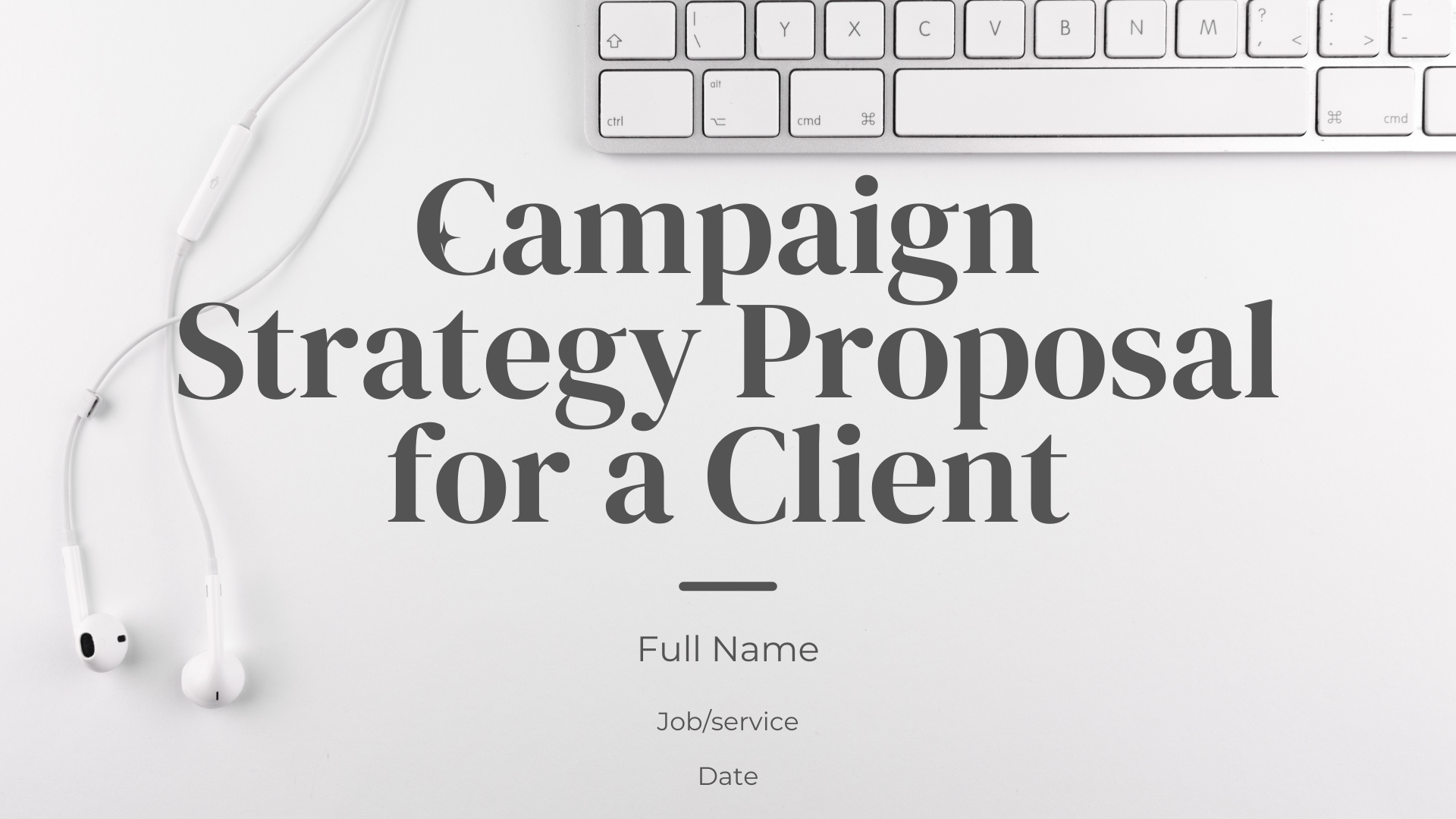
- Title Page - The title page of your Google Ad Campaign Strategy Proposal must display your full name, the service that you will be doing, and the date that you will send or present the proposal to your client.
- Catchy phrase - You can indicate a catchy phrase related to your business in the second part of your Google Ad Campaign Strategy Proposal. This should encourage your client to see the services that you offer and the strategies that you have prepared for their campaigns.

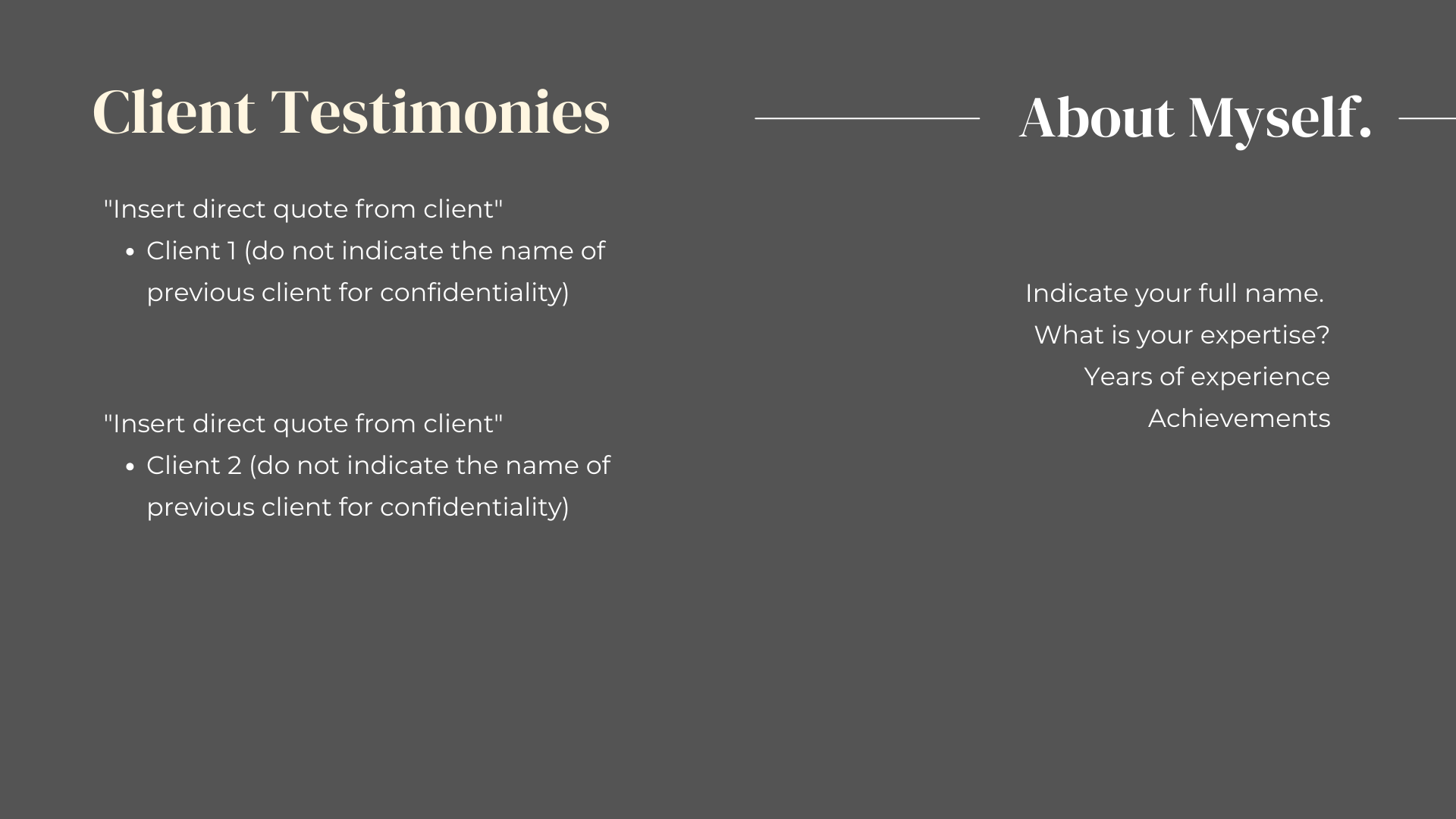
- Introduction - The introduction shows two parts: the client testimonials and details about yourself. This is relevant in your proposal because it is necessary to establish trust between you and the client. To introduce yourself, you must state your full name, expertise, years of experience in the field, and achievements. In the client testimonials, you can gather testimonies from your previous clients to support your achievements. If possible, it should also be near the field of your new client.
- Campaign Platform - The campaign platform part of the campaign strategy proposal indicates Google Ads as the campaign platform. To convince the client, you can indicate the advantages of utilizing Google Ads for their business and other Google apps that can be used with it to achieve the business goals and monitor the progress of the business.
- Campaign Objective - In the campaign objective, it must be decided by both you and your client. There are several objectives that Google Ads offers: Sales, Leads, Website traffic, Product and brand consideration, Brand awareness and reach, App promotion and Local store visits and promotions. Each objective can be achieved by different strategies, so it must be established first. By doing the proposal, you are giving your client ideas on how you can improve their business in creating a campaign.
- Preferred Campaign Type - In the campaign type, there are also several options in the Google Ads such as Search, Performance Max, Display, Shopping, Video, Discovery, Smart, and App. These are not available for every campaign objective, but some are available for each specific type. You can decide on this matter and explain it to your client through the proposal. Discreetly tackle how the chosen type would be beneficial for your campaign objective.
- Budget - You will also present in the Google Ad Campaign Strategy Proposal the predicted daily and monthly budget of the Ads you will run through Google Ads. You can check it on the Google Ads website, as Google provides different options on how you can choose the right amount for your ads. They also have a recommended value of price, and it depends on your client’s budget whether they will want to take it or not, but this is usually a great deal.
- Bidding - You also need to explain the id strategies that you will implement on your client’s business. In Google Ads, they can provide you with different bid strategies that you can utilize in your campaigns; This includes Target CPA, Target ROAs, Maximization of clicks, Maximization of conversions, Maximization of conversion value, and Target impression share.
- Assets - This is the field where you can indicate some of the important details of your client’s business. Included here are the business site links, directions, email, and a telephone or phone number. You can obtain this from the information you request directly from the client or you can also research for it.
- Ad groups - These are groups that contain a number of related ads that revolve around a singular target. This is related to the bidding and price that allows the certain ad group’s keywords to encourage the ad to show in search engines. You can classify your client’s products or services in these ad groups for efficient campaigning.
- Targeting selection - Targeting selection is prepared and discussed in a proposal to tackle the different targeting methods that the business will utilize with its target objectives. Targeting allows you to narrow down leads from diverse groups of people. This can be based on different aspects, which usually happens to be locations, topics, keywords, or audiences.
- Conversions - Conversions can be utilized to track the events after an audience clicks your ads. Some of the actions that people may do is to subscribe to newsletter, purchase a product or service, and redirect to your client’s website for their business.
- Contact information - In the last space, you should indicate your contact information so the client can reach you whichever communication method works the best for them. Some of the recommendable contact information that you should include in your proposal are the following:
-
Email: Make sure that the email you will provide them is your professional and not personal email to provide consistency in professionalism.
-
Mobile or phone number: You can indicate here your personal number. Make sure that you include the country code in case you came from a different country.
-
Physical Address: This is where your office is located. If you do not have an office and are working remotely, you can exclude this information.

Conclusion
You’re done! Always remember that creating a Google Ad Campaign strategy proposal for a client is as important as creating a resume for a job application, so it must be researched carefully to make amends with your client’s wants.
-
A campaign strategy proposal demonstrates a person's or a group's capacity to plan advertising campaigns that are pertinent to a client's company.
-
Meeting with your client to go over their goals is essential for their company, whether they are to generate leads, boost website traffic, or make more sales.
-
Some of the best practices for creating a campaign proposal for the client includes four steps: Introduction, platform selection, creation of outline, and finalization of the terms and conditions.
-
The most important step is the creation of the campaign proposal, which you can get done by using presentation templates, document templates, or by making a website.
-
After revisions on the proposal, you now have a client!