Analyzing Competitor Traffic Reports for Enhanced Insights
For you to learn how to analyze your competitor's traffic sources to gain insights into their online marketing strategies and identify potential opportunities for your own…
Prefer a shortcut? 16 free tools do parts of this for you.

Aim: For you to learn how to analyze your competitor's traffic sources to gain insights into their online marketing strategies and identify potential opportunities for your own business.
Optimal Outcome: For you to gain a comprehensive understanding of your competitor's online marketing strategies and the ability to use this information to improve your own online marketing efforts.
What do you need to start: Competitor analysis tools, list of competitor websites, basic knowledge of digital marketing
Why is this SOP Important: By understanding how your competitors are driving traffic to their websites, you can develop more effective online marketing strategies that can help you compete more effectively in your market.
When and Where to execute: This SOP can be executed as often as needed to gain a better understanding of your competitors' online marketing strategies. The analysis can be done from anywhere with an internet connection, using a competitor analysis tool.
Who Should Be Doing This: This SOP can be used by anyone involved in digital marketing, such as digital marketing managers, search engine optimization specialists, and digital marketing analysts.
Step 1: Choose a competitor analysis tool.
There are several tools available for analyzing competitor website traffic, including SEMrush, SimilarWeb, and Ahrefs.
Choose a tool that suits your needs and budget.
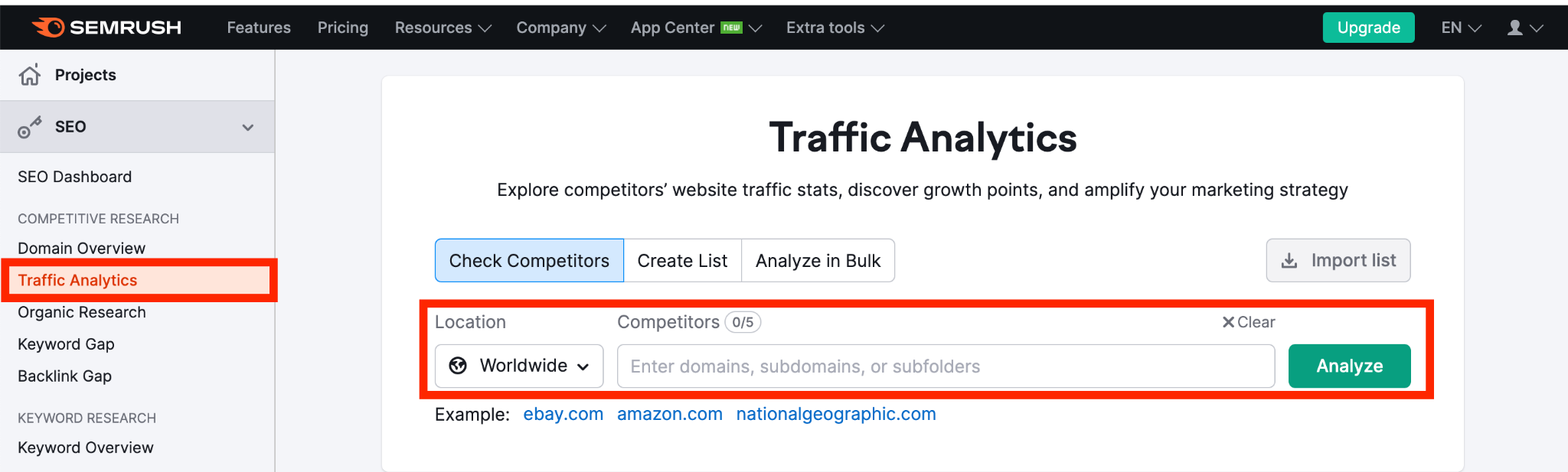
Step 2: Enter your competitor's website URL into the tool.
(For illustration purposes, we’re using SEMrush.)
- Navigate to Traffic Analytics in the left sidebar, select a location, enter your competitor’s website URL, then click Analyze.
Step 3: Look at the sources of traffic.
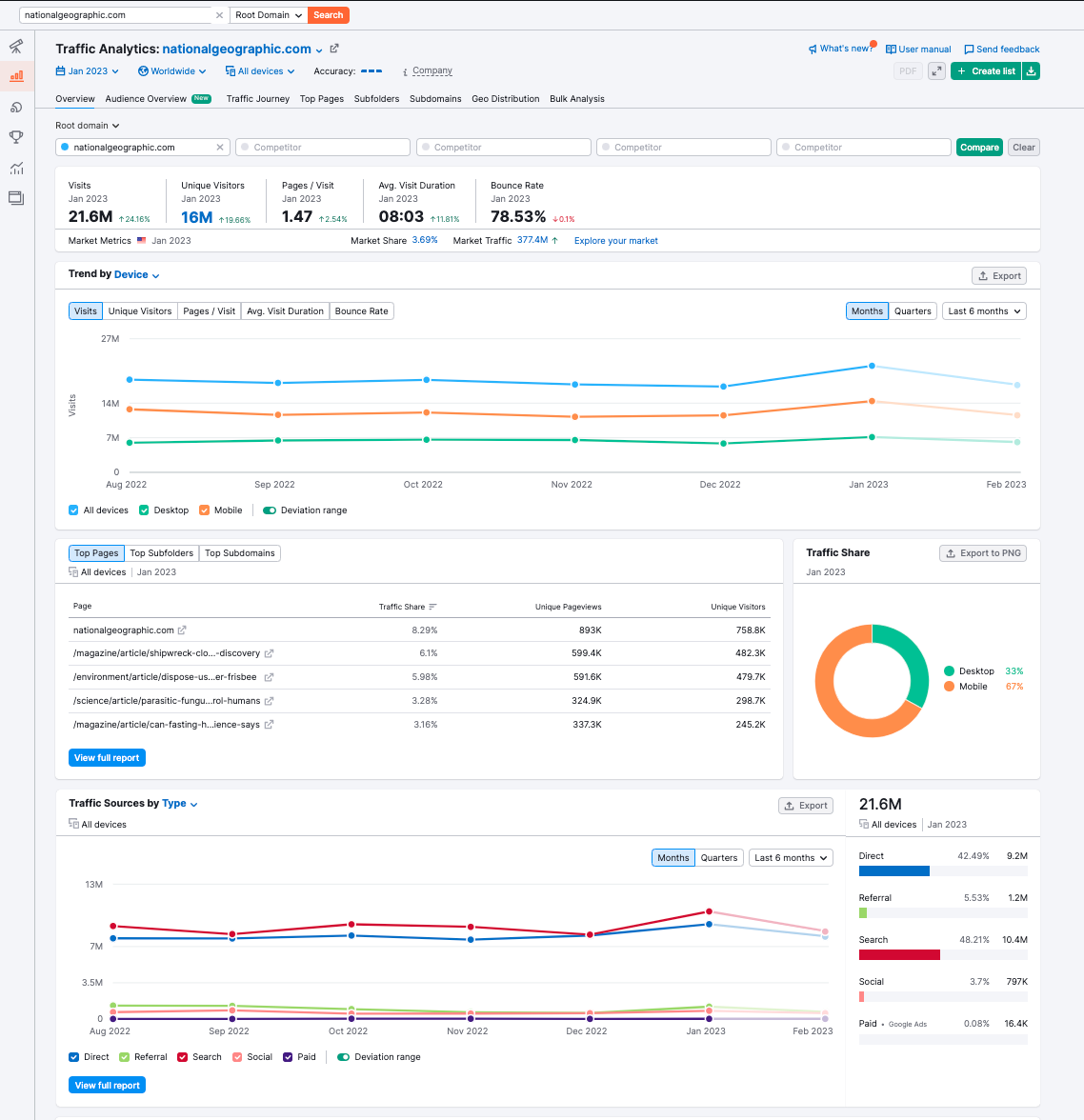
Most competitor analysis tools will provide a breakdown of the sources of traffic to your competitor's website, including organic search traffic, paid search traffic, social media traffic, direct traffic, and referral traffic.
(In this example, we used nationalgeographic.com as the competitor URL)
Step 4: Identify the primary sources of traffic.
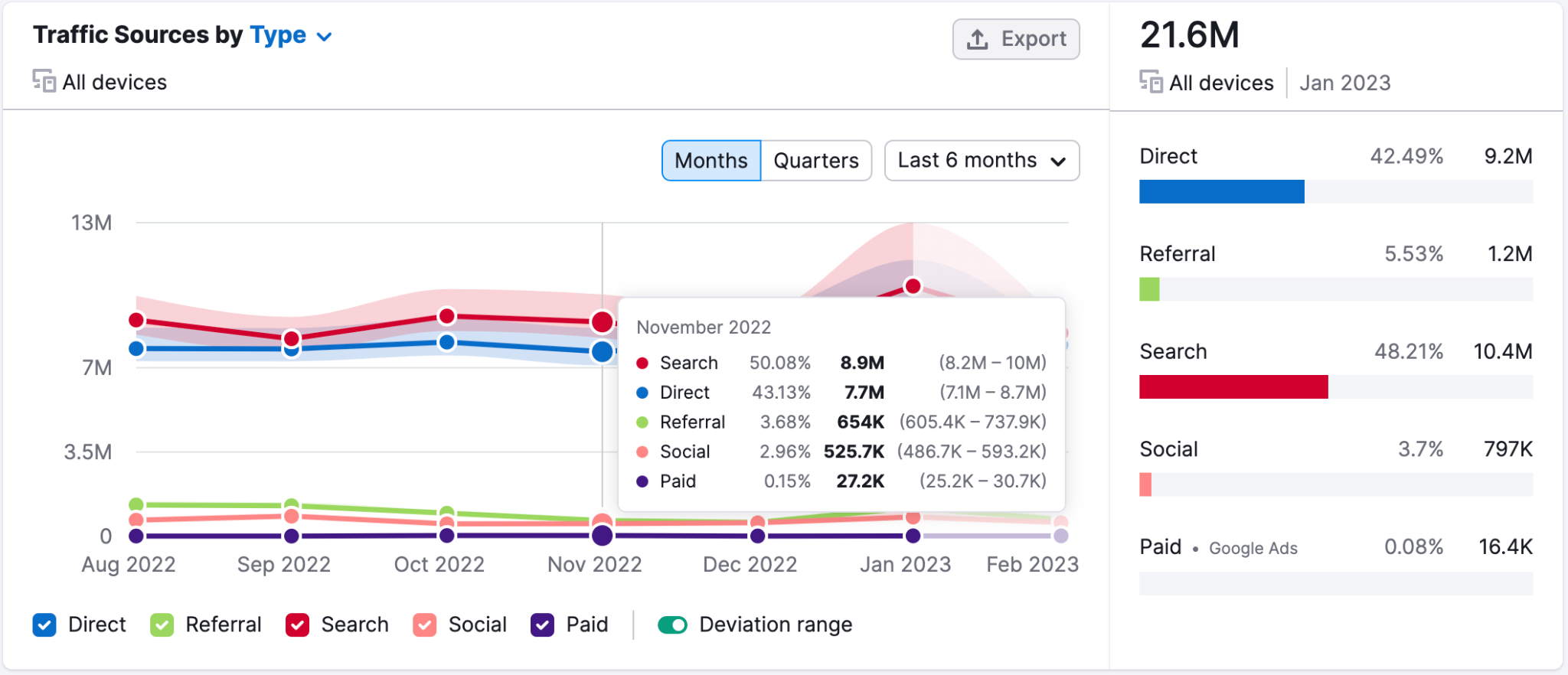
Look for the sources of traffic that are driving the most visitors to your competitor's website.
These may be organic search traffic from search engines like Google, paid search traffic from ads on Google or other search engines, or social media traffic from platforms like Facebook, Twitter, or Instagram.
Step 5: Analyze the keywords driving traffic.
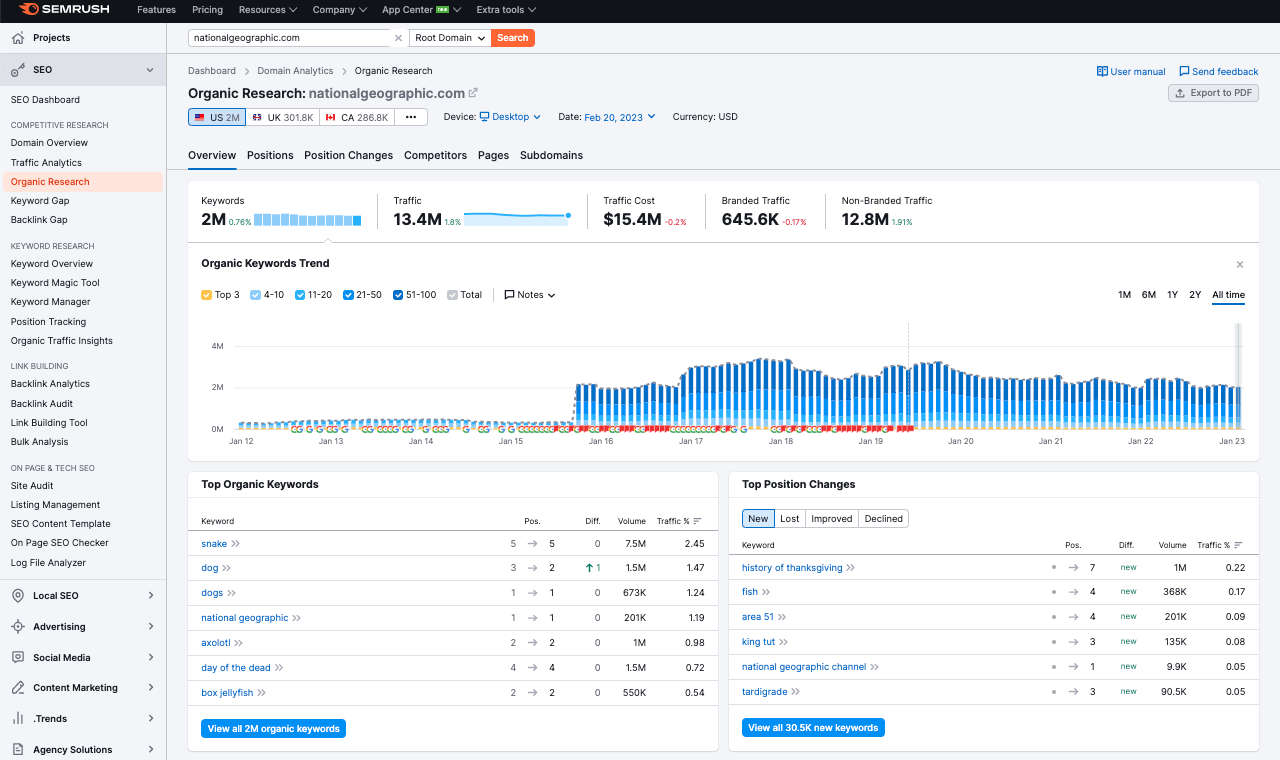
If your competitor is receiving a significant amount of organic search traffic, look at the keywords that are driving that traffic. This can give you insights into the types of content and topics that are resonating with your competitor's audience.
- To do this, navigate to Organic Research in the left sidebar.
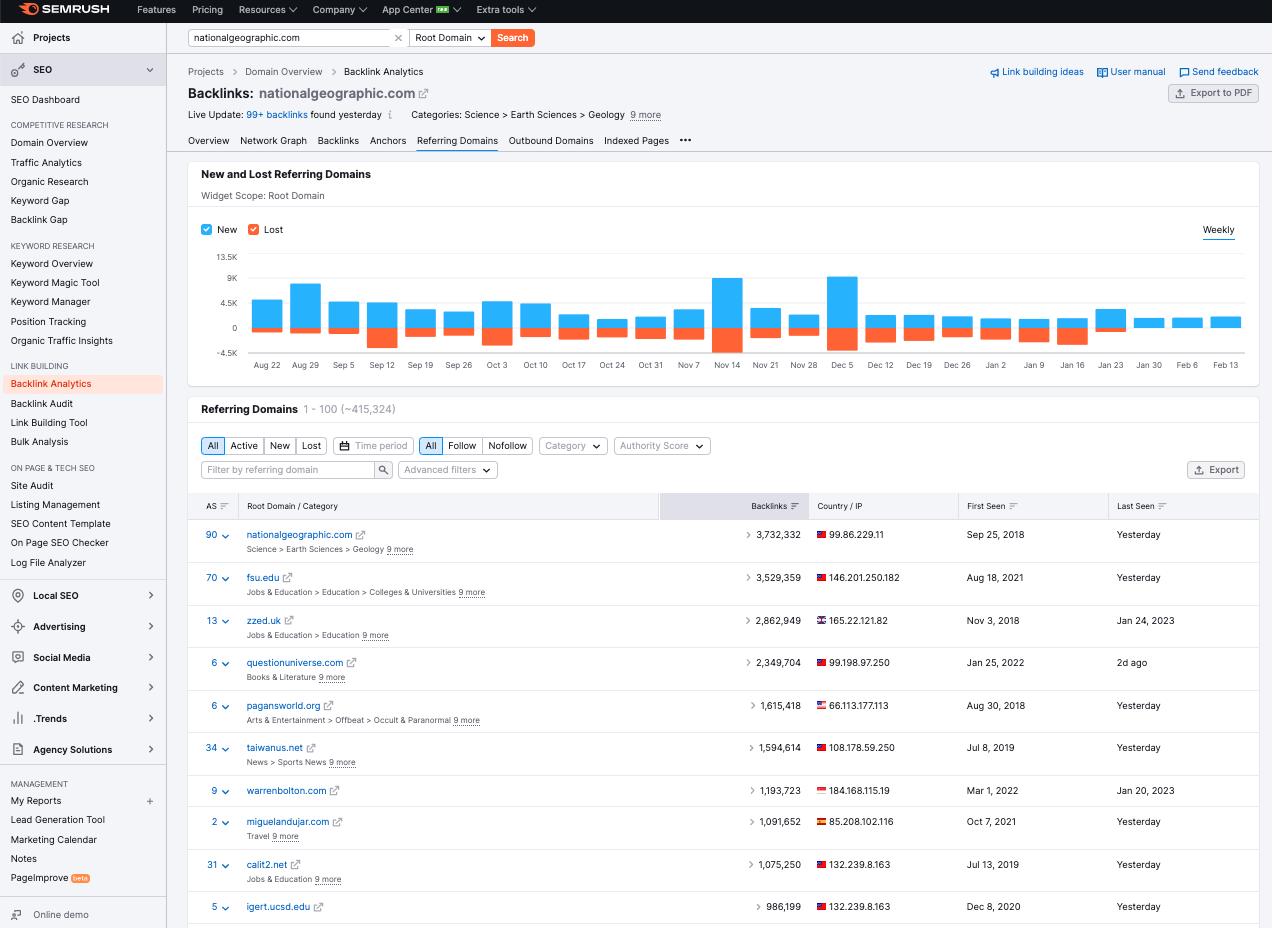
Step 6: Look at the referring domains.
If your competitor is receiving a significant amount of referral traffic, look at the domains that are referring traffic to their website. This can give you insights into the types of websites and content that are linking to your competitor's website.
- To do this, navigate to Backlink Analytics in the left sidebar.
Step 7: Make notes and observations.
-
As you analyze your competitor's traffic sources, make notes and observations about the data you're seeing.
-
Use this information to identify potential opportunities for your own online marketing strategies.
Step 8: Use the information to improve your own online marketing strategies.
-
Based on the insights you've gained from analyzing your competitor's traffic sources, develop a plan to improve your own online marketing strategies.
-
Use this information to refine your keyword targeting, improve your content marketing efforts, and optimize your social media and paid advertising campaigns.
Conclusion
You’re done!
By following this SOP, you can gain a better understanding of your competitor's online marketing strategies and identify potential opportunities to improve your own online marketing efforts.
Execution Checklist:
-
Choose a competitor analysis tool.
-
Enter your competitor's website URL into the tool.
-
Look at the sources of traffic.
-
Identify the primary sources of traffic.
-
Analyze the keywords driving traffic.
-
Look at the referring domains.
-
Make notes and observations.