A Guide to Conducting Effective Customer Interviews
To provide a systematic approach to conducting effective customer interviews to gain valuable insights and feedback to improve the customer experience, increase sales, and drive…
Prefer a shortcut? 16 free tools do parts of this for you.
Aim: To provide a systematic approach to conducting effective customer interviews to gain valuable insights and feedback to improve the customer experience, increase sales, and drive business growth.
Optimal Outcome: Conduct successful and informative customer interviews to gain valuable insights that will help your business grow and improve.
What do you need to start: To conduct the interview, you will need the contact information for customers (email, phone number, etc.), interview questions and a plan for conducting the interview, a recording device or software (if allowed by customer) and a quiet and distraction-free location for the interview.
Why is this SOP Important: Customer interviews are a valuable tool for gaining insights into customers’ needs, preferences, and pain points. By conducting interviews, you can better understand your customers and make improvements to your business that will enhance their experience and ultimately drive more sales.
When and Where to execute: Customer interviews should be conducted regularly as part of your ongoing efforts to improve your business. Interviews can be conducted either face-to-face or online, depending on the customer’s preference.
Who Should Be Doing This: The marketing or customer service team is best suited to conduct customer interviews. They should have excellent communication skills and be knowledgeable about the products and services offered by the e-commerce business.
Why do you conduct customer interviews?
Customer interviews are a research method used to collect feedback and insights directly from customers about their experience with a product or service. The purpose of conducting customer interviews is to gain a deeper understanding of customers' needs, preferences, and pain points. This information can then be used to improve the product or service, create better marketing messages, and tailor the overall customer experience to better meet the needs of customers. Ultimately, conducting customer interviews can lead to higher customer satisfaction, retention, and loyalty, which can positively impact the growth and success of a business.
Execution
Resources/Tools & Set up
-
Interview Guide
-
Recording Equipment
-
Note-taking tools
-
Communication platform
-
Customer Database
Choose the Customers to Interview
-
Identify a diverse group of customers to interview to get a broad understanding of their needs and preferences.
-
When choosing a customer to interview, there are several things to consider which include:
-
Customer type: Consider the type of customer you want to interview. Do you want to speak with your most loyal customers, your newest customers, or a mix of both?
-
Behavior and usage: Consider the behavior and usage of your customers. Do they use your product or service frequently or infrequently?
-
Geography: Consider the location of your customers. Do you want to focus on customers in a particular region or location?
-
Demographics: Consider the demographic information of your customers. Do you want to speak with customers from a particular age group or income level?
-
Previous feedback: Consider customers who have previously given feedback or complaints. This can help address any issues and improve the overall customer experience.
Reach Out to Customers and Schedule Interviews
-
Contact the chosen customers to ask if they would be willing to participate in an interview.
-
Clearly communicate the purpose of the interview and the topics that will be covered.
-
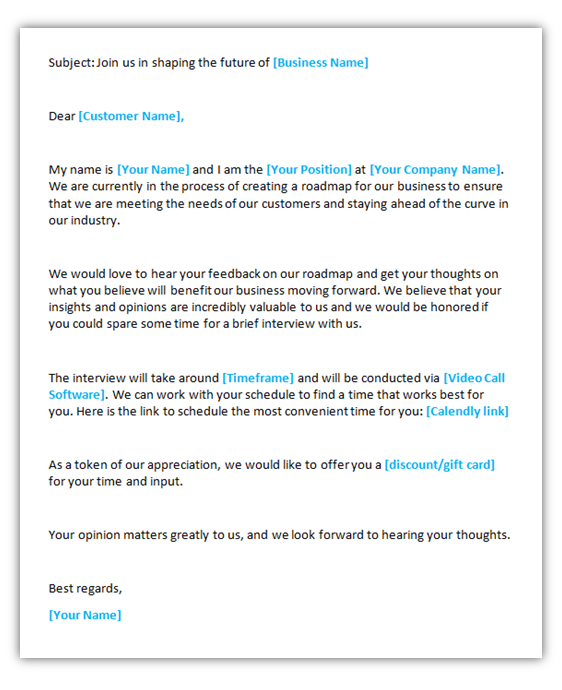
When writing an email to invite a customer for an interview, it is important to be clear and concise about the purpose of the interview and what the customer can expect. Here are some tips on how to write an effective email for a customer interview invitation:
-
Start with a clear subject line: The subject line should clearly state that you are inviting the customer for an interview and what the purpose of the interview is. Keep it short and to the point.
-
Introduce yourself and your company: Start the email by introducing yourself and your company. Let the customer know who you are and what your company does.
-
Explain the purpose of the interview: Clearly explain why you are conducting the interview and what you hope to achieve from it. Be honest and transparent about your intentions.
-
Offer an incentive: Consider offering an incentive, such as a discount or a gift card, for the customer's time. This can be a good way to encourage them to participate in the interview.
-
Provide details: Give the customer all the details they need to know about the interview. This includes the date and time, the duration of the interview, the format of the interview (in-person, phone, or video), and any other important information they need to know.
-
Thank them: Thank the customer for their time and let them know that you appreciate their participation.
Sample Letter:
-
Schedule a time and date that works for both the customer and the interviewer.
-
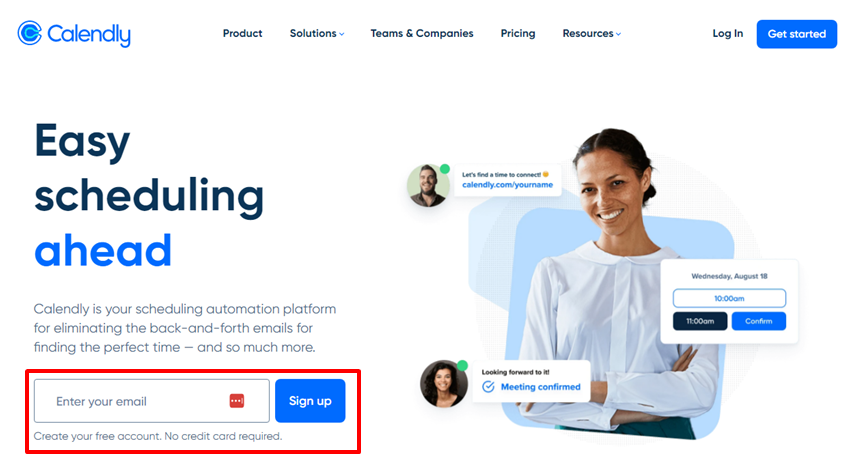
Use Calendly to schedule your online interviews.
- Create a Calendly account or sign in to your existing account.
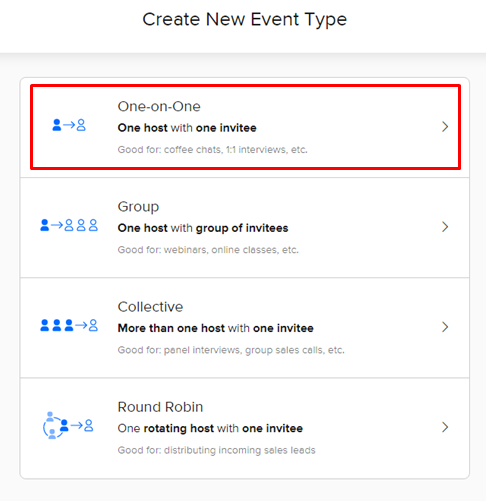
- Click on the "New Event Type" button on the dashboard then select “One-on-One”.
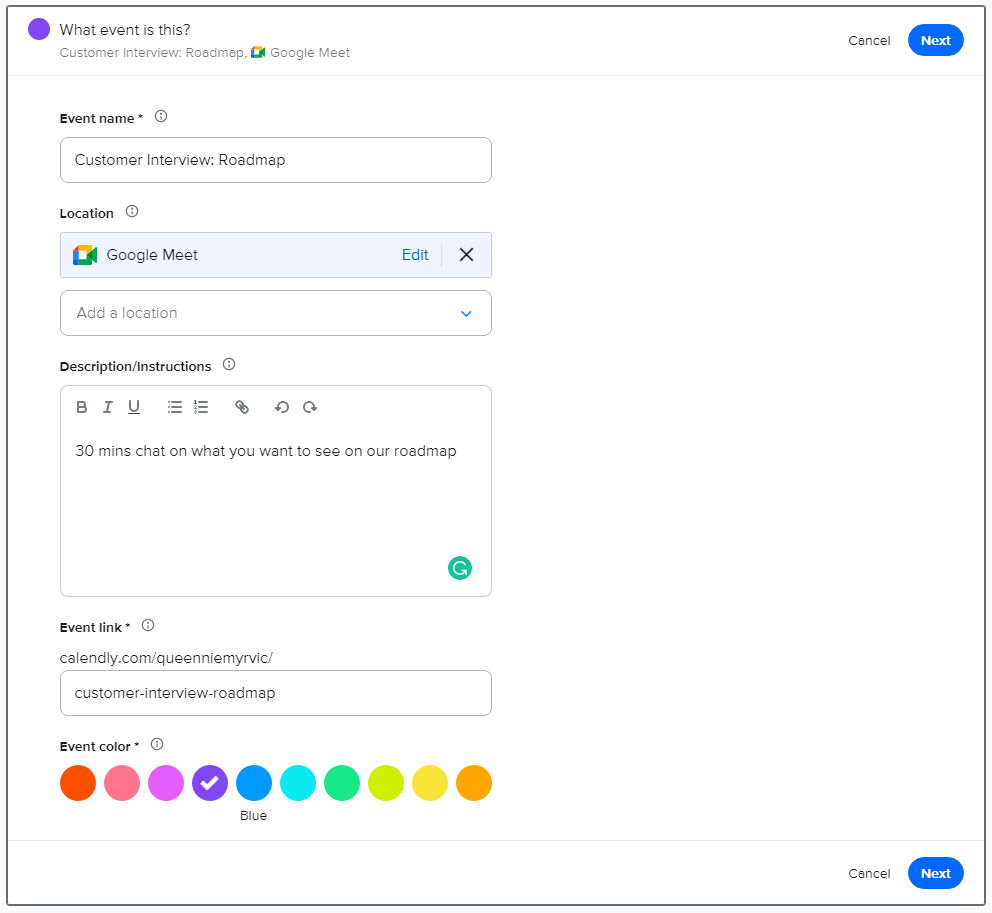
- Customize the event settings by adding a name, description, location, and duration of the meeting.
Event Name - An event name that your customer will see. Choose a name that's clear to your customers.
Location - Select a location that can include video conferencing options like Google Meet, Zoom, or Microsoft Team.
Description -Add a short description with an agenda to help prepare your customers.
Event Link - Short URL link for the event that you will share with your customer. Don’t forget to include it in your outreach email.
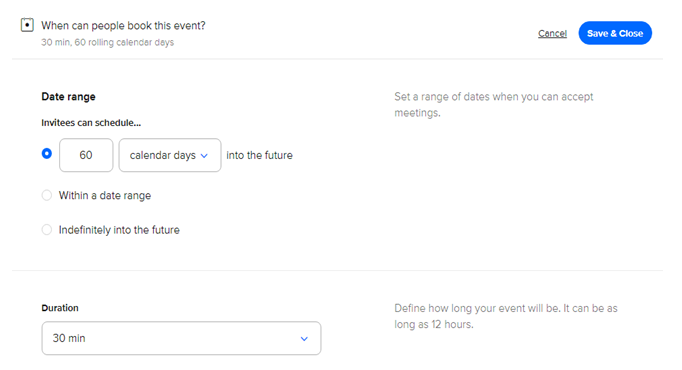
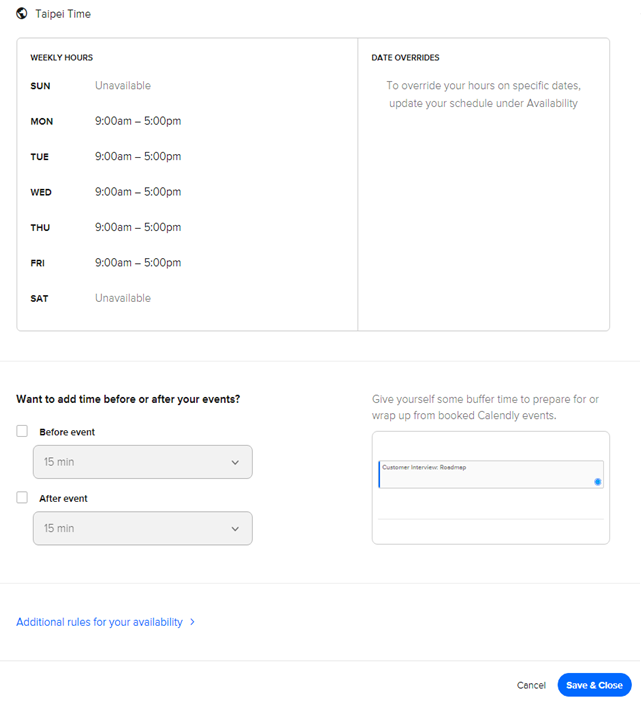
- Set the time, date, and duration of the event. You can choose the number of days you want to allow customers to schedule a meeting and specify the duration of each meeting. You can also customize the scheduling time period and set up breaks in between meetings.
-
Customize the email notification settings for your attendees and yourself.
-
Choose the calendar integration you want to use to keep track of your meetings.
-
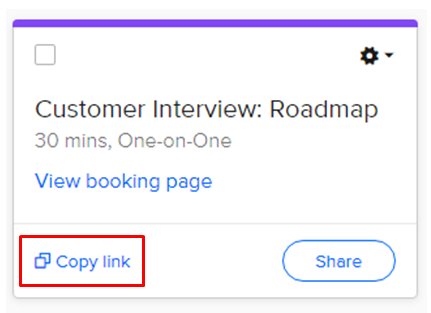
Save your event and copy the scheduling link to share with your attendees via email.
Prepare for the Interview
- Develop a list of questions to guide the interview. Here are some guidelines for preparing interview questions:
-
Start with open-ended questions that allow the customer to share their thoughts and experiences in their own words. For example, "Can you tell me about a time when you used our product/service?"
-
Focus on the customer's pain points and needs, and ask how your product or service has helped them address those issues.
-
Ask about the customer's decision-making process, including what factors they consider when choosing a product or service.
-
Inquire about the customer's experience with your brand's customer service and support, and whether they feel their needs are being met.
-
Ask for feedback on specific features or aspects of your product or service, and what could be improved.
-
Ask about the customer's expectations for the future, including what they would like to see from your brand in the coming months or years.
-
Ask about the customer's overall satisfaction with your product or service, and whether they would recommend it to others.
-
Inquire about the customer's experience with competitors, and how your brand compares.
-
Ask about the customer's experience with your brand's marketing and messaging, and whether they find it effective or relevant.
-
Ask about the customer's experience with your brand's pricing, and whether they find it fair and competitive.
- Have a plan for recording the interview, either through a recording device or software.
Conduct the Interview
By following these guidelines, you can conduct effective interviews that provide valuable insights and help you make informed decisions.
-
Build rapport: Start the interview by introducing yourself, thanking the customer for their time, and building rapport. You can ask about their day or make small talk to create a friendly and comfortable environment.
-
Set the tone: Let the customer know that their feedback is valuable and that you are here to listen. Encourage them to speak freely and openly and assure them that their responses will be confidential.
-
Ask open-ended questions: Use open-ended questions that allow the customer to elaborate on their thoughts and opinions. Avoid leading questions that may influence their responses.
-
Listen actively: Pay attention to the customer's responses and ask follow-up questions to clarify or dig deeper into their answers. Show that you are engaged by nodding, maintaining eye contact, and asking relevant questions.
-
Take notes: Take detailed notes during the interview to ensure you capture all the important information. This will help you analyze and summarize the feedback later.
-
Record the interview: It's a good idea to record the interview with the customer's consent. This will allow you to refer back to the conversation later and capture any insights that you may have missed. Be sure to ask for the customer's permission to record the interview and explain how the recording will be used. You can use a variety of tools to record the interview, such as Zoom's recording feature, a digital voice recorder, or a smartphone app. Just make sure you test the recording tool before the interview to ensure that it's working properly.
-
Be respectful: Be respectful of the customer's time and keep the interview on track. Avoid getting sidetracked or going off-topic, and be mindful of any time constraints they may have.
-
Wrap up the interview: End the interview by thanking the customer for their time and valuable feedback. Let them know what the next steps are, and when they can expect to hear back from you.
Follow up with the Customer
Follow up with your customer and show them that their input has made a difference. This will help you build strong relationships with your customers and improve your business at the same time.
-
Send a thank-you email: Send a brief email thanking the customer for their time and valuable feedback. Express your appreciation and let them know that their insights will help you improve your business.
-
Share the results: If you promised to share the results of the interview with the customer, make sure to follow through. Send them a summary of the insights you gained and how you plan to use them.
-
Provide the reward: If appropriate, give the customer a small reward for their time and feedback. This could be a discount code or a free product or service.
-
Keep in touch: Keep the lines of communication open with the customer. Follow up with them periodically to let them know how you've implemented their feedback and to ask for more feedback in the future.
-
Ask for a review: If the customer had a positive experience with your business, consider asking them to leave a review on your website or social media channels.
Analyze the results and Implement Improvements
Analyzing the results of customer interviews involves identifying trends and patterns in the feedback gathered, which can then be used to make data-driven decisions to improve the business. Follow these guidelines to help you perform effective analysis and ultimately formulate actionable plans for your business:
-
Compile and categorize responses: Go through the interview transcripts and compile the responses into categories or themes. This will make it easier to identify patterns and trends.
-
Identify strengths and weaknesses: Based on the responses, identify areas where your business is performing well and areas where improvements can be made.
-
Prioritize areas for improvement: Determine which areas for improvement have the greatest impact on the customer experience, and prioritize them accordingly.
-
Develop an action plan: Create a plan of action that outlines specific steps to be taken to address the areas for improvement. Assign tasks to team members and set deadlines.
-
Implement improvements: Once you have a plan in place, implement the improvements and track progress.
-
Monitor results: Keep track of the impact of the improvements on the customer experience. Monitor customer feedback and track changes in customer behavior to determine the effectiveness of the changes made.
-
Continuously iterate: Use the results of the customer interview and the implementation of improvements as a feedback loop to continuously improve the customer experience. Regularly conduct follow-up interviews to track progress and identify additional areas for improvement.
Conclusion
You’re done! Remember, conducting customer interviews is an essential part of gathering insights to improve your business. By following the execution checklist you can gain valuable feedback to make data-driven improvements and provide a better customer experience.
Execution Checklist:
-
Choose the Customers to Interview
-
Reach Out to Customers and Schedule Interviews
-
Prepare for the Interview
-
Conduct the Interview
-
Follow up with the customer
-
Analyze results and implement improvements