
Shopify Beverage Brand Product Page Optimization
A functional drink store had the traffic and the reviews. The page still earned $0.60 a visitor. Here's the beverage product page rebuild that moved it.

A founder selling a functional energy drink showed me his Shopify dashboard last month. Strong traffic. 400 reviews averaging 4.7 stars. A product people genuinely loved once they tried it.
And a page earning $0.60 per visitor.
He thought he had a traffic problem. He had a page problem, and Shopify beverage brand product page optimization is the fix that almost never gets looked at, because the store owner is too busy buying more clicks to notice the page is leaking every one of them.
Here's the thing about beverages. People don't buy a can. They buy a moment. Morning focus. The thing they reach for after the gym. The drink that finally helps them sleep. The page that wins lists none of those. It lists milligrams.
Why Beverage Pages Leak More Than Most
Beverages have a problem other products don't. The reason to buy is invisible.
A pair of headphones, you can photograph. A beverage, the entire value lives in how it makes you feel an hour after you drink it. So the lazy move is to fall back on the one thing you can show: the label. Caffeine content. Electrolyte count. A supplement-facts panel screenshotted straight off the can.
That panel answers a question nobody is asking. The buyer isn't standing on your page doing chemistry. They're asking one thing.
Will this do for me what I want it to do?
Run the math on a store like this. Picture a functional energy drink brand at a 1.25% conversion rate and a $48 average order value. That's $0.60 per visitor. On 10,000 visitors, that's $6,000.
Every click that founder paid for came back worth sixty cents. Not because the drink was weak. Because the page was mute on the one thing that closes the sale.
The First Lever: Lead With the Use Case, Not the Ingredients
The fastest win on a beverage page is moving the use case above the fold, into the product page hero section where the buyer makes the keep-reading decision.
Most beverage stores open with a hero shot of the can and a clever product name. "Surge." "Lumen." "Drift." Beautiful. Meaningless to a cold visitor. They have no idea when, why, or for whom this drink exists.
Compare that to a hero that says, in plain words, "Clean morning energy without the 2pm crash" or "The magnesium drink that gets you to sleep in 20 minutes." Now the buyer knows in one second whether this is for them. The ones it's for keep reading. The ones it isn't leave fast, which is fine, they were never going to buy.
This is the same lever that moved our flagship bedding brand. They came to us doing $38,000 a month on Shopify. Conversion rate was 1.0% and average order value was $125. That means their revenue per visitor was $1.25. On 10,000 visitors, that's $12,500. (Real client numbers, not typical results, and not a promise of what your store will do. See the real before and after results from client stores.)
We rebuilt the pages so each one answered the buyer's silent question instead of describing the product. Conversion rate moved to 3.5%. Average order value climbed to $231. Revenue per visitor went from $1.25 to $8.10. On the same 10,000 visitors, that's $81,000 instead of $12,500.
Same product. Same traffic. The page started answering the question.
The Second Lever: Sell the Case, Not the Can
Here's where beverage stores leave the most money sitting on the table: order value.
A beverage is a repeat-purchase product. Nobody buys one can of a drink they like. They buy a supply. But most product pages default to a single-unit add to cart, which quietly caps the order at the price of one drink.
The page should make the case-sized purchase the obvious one. A 12-pack starter at a small per-unit discount. A "first month supply" framed around the outcome, 30 mornings of focus, not 30 cans. The buyer was always going to need more. The page just has to offer it before they leave.
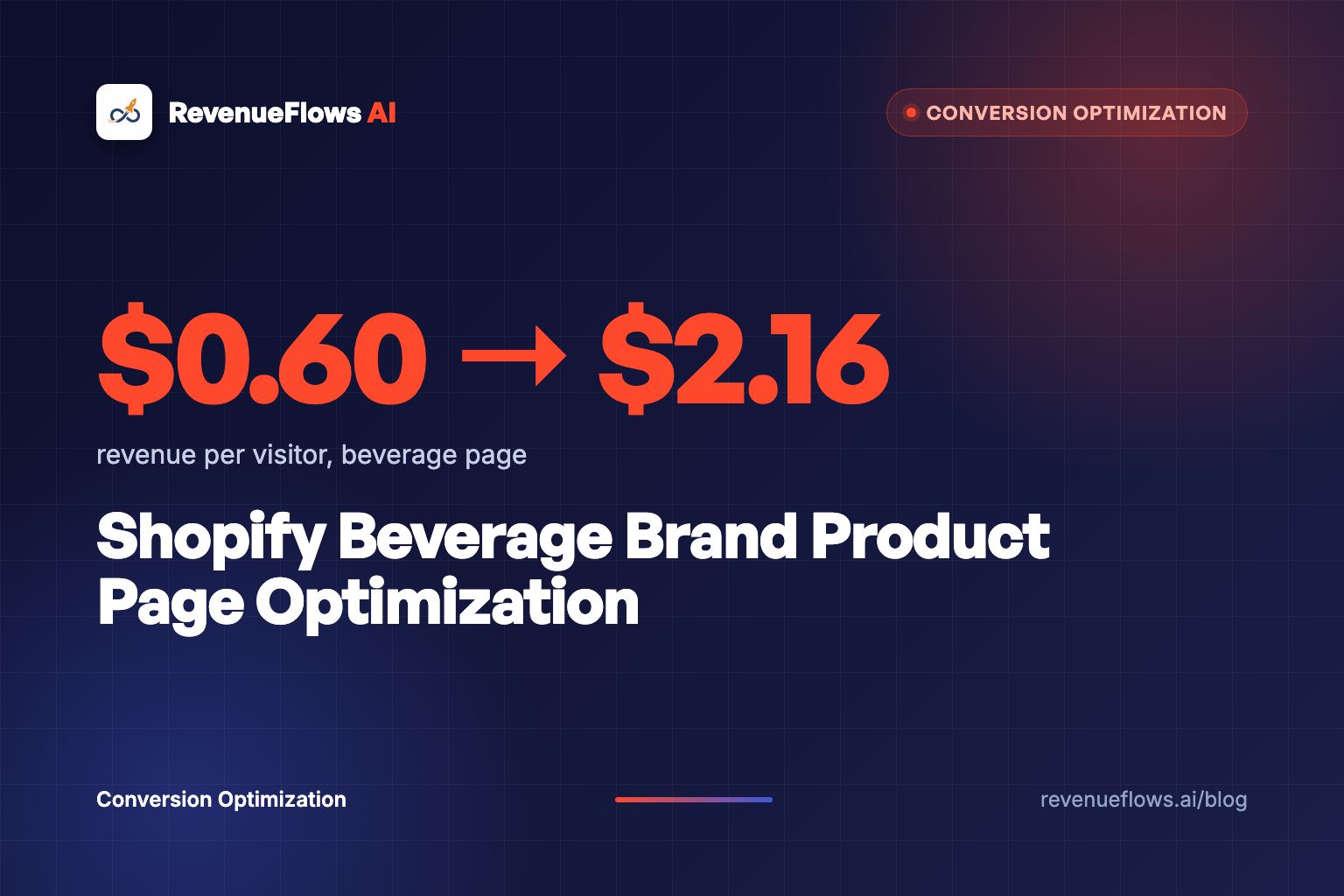
Watch what happens to the math. Take that same beverage store. Rebuild the page to lead with the use case and present a starter pack as the default. Conversion rate moves to 3.0%. Average order value climbs to $72, because buyers are taking the pack instead of one can. Revenue per visitor goes from $0.60 to $2.16. On the same 10,000 visitors, that's $21,600 instead of $6,000.
That's $15,600 more a month. Same ad budget. Same traffic. The store stopped selling cans and started selling the supply people actually wanted.
The single-can page wasn't converting low because the drink was wrong. It was converting low because it kept asking buyers to make the small purchase when they came ready to make the big one.
For the deeper version of this order-value move, see the Shopify product page rewrite service breakdown, where the same single-unit-versus-supply logic drives both halves of the number at once.
The Third Lever: Handle the Taste Objection On the Page
Every beverage has one objection that kills more sales than price: does it actually taste good?
People have been burned. The healthy drink that tasted like dirt. The energy drink that was pure chemicals. The buyer assumes yours is the same until the page proves otherwise. And a star rating alone doesn't do it, because a 4.7 average says "people like it" without saying "you, specifically, will like the taste."
The page handles this by pulling the taste verdict out of the reviews and putting it where the decision happens. A pulled quote near the add to cart that says "I expected it to taste like medicine. It tastes like a real lemonade." A short note on what it is sweetened with, because that's the buyer's real worry. The objection gets answered before it becomes a reason to close the tab.
This is product page work, not ad work. A beverage page carries different objections than an electronics page, where the buyer's fear is whether the thing works as described. A free DTC conversion audit is built to surface exactly that gap. Different niche, same principle: find the one question killing the sale, answer it on the page.
Where This Pays Off, and Where It Doesn't
A fair warning. Page work multiplies traffic that already exists. If a beverage store has 800 visitors a month, a rebuilt page is still the right move, but the dollar gap is small because the traffic is small.
The store where this pays off fastest is the one already spending on ads and getting clicks, the one with a conversion rate stuck under 2% and a founder convinced the answer is a new flavor or a bigger ad budget. That store is sending paid traffic into a page earning under a dollar a visitor. Every fix to the page lifts the return on every click already being bought.
The leak compounds the other way too. Baymard Institute puts average cart abandonment near 70%, and a vague product page feeds that number, buyers add a can, hesitate because the page never made the case, and leave. Fixing the page upstream is cheaper than chasing them down with recovery emails.
What This Looks Like For Your Beverage Store
Beverage brand product page optimization on Shopify comes down to three moves, in order. Lead with the use case so the buyer knows in one second this is for them. Sell the supply, not the single unit, so order value reflects what people actually want. Answer the taste objection on the page so the one real fear gets handled before checkout.
You don't need a new flavor or a bigger ad account to do any of it. You need the page to say the right things in the right order. If you want the number-tracking discipline behind all of this, revenue per visitor versus conversion rate shows you why a beverage store can raise conversions and still lose money, and which number to actually watch.
Book Your Profit Audit
Get your free profit audit and we'll show you exactly where your beverage page is leaking revenue per visitor right now, then how to rebuild a high-converting product sales page in less than 15 minutes.
Ishan Soni Founder, RevenueFlows AI
P.S. The founder with the 4.7-star energy drink didn't have a product problem. His page asked for a sixty-cent sale when buyers showed up ready for a two-dollar one. Fix what the page offers before you brew a new flavor.
Frequently asked questions
What hurts conversion rate most on a Shopify beverage product page?
A page that lists ingredients instead of answering why someone should drink it. Beverage buyers decide on a use case, morning energy, post-workout, better sleep, and most pages bury that in a supplement-facts panel. Answer the use case above the fold and conversion rate moves before you touch anything else.
How do you raise average order value on a beverage store?
Sell the case, not the can. A single-unit page caps order value at one drink. A page built around a starter pack or a monthly supply at a per-unit discount lifts average order value without a sitewide sale. The bedding brand we worked with raised average order value from $125 to $231 the same way, by changing what the page offered, not the price.
Does subscription help beverage product page conversion?
It helps order value and retention, but only after the page sells the first purchase. A subscribe-and-save toggle on a page that hasn't earned the sale just adds a decision. Win the single purchase first, then present the subscription as the cheaper way to keep buying.
How fast can a beverage product page be rebuilt?
With RevenueFlows AI you drop in the product URL and the page is rewritten and rebuilt in less than 15 minutes. A free profit audit shows you the leak first, then the rebuild closes it.